
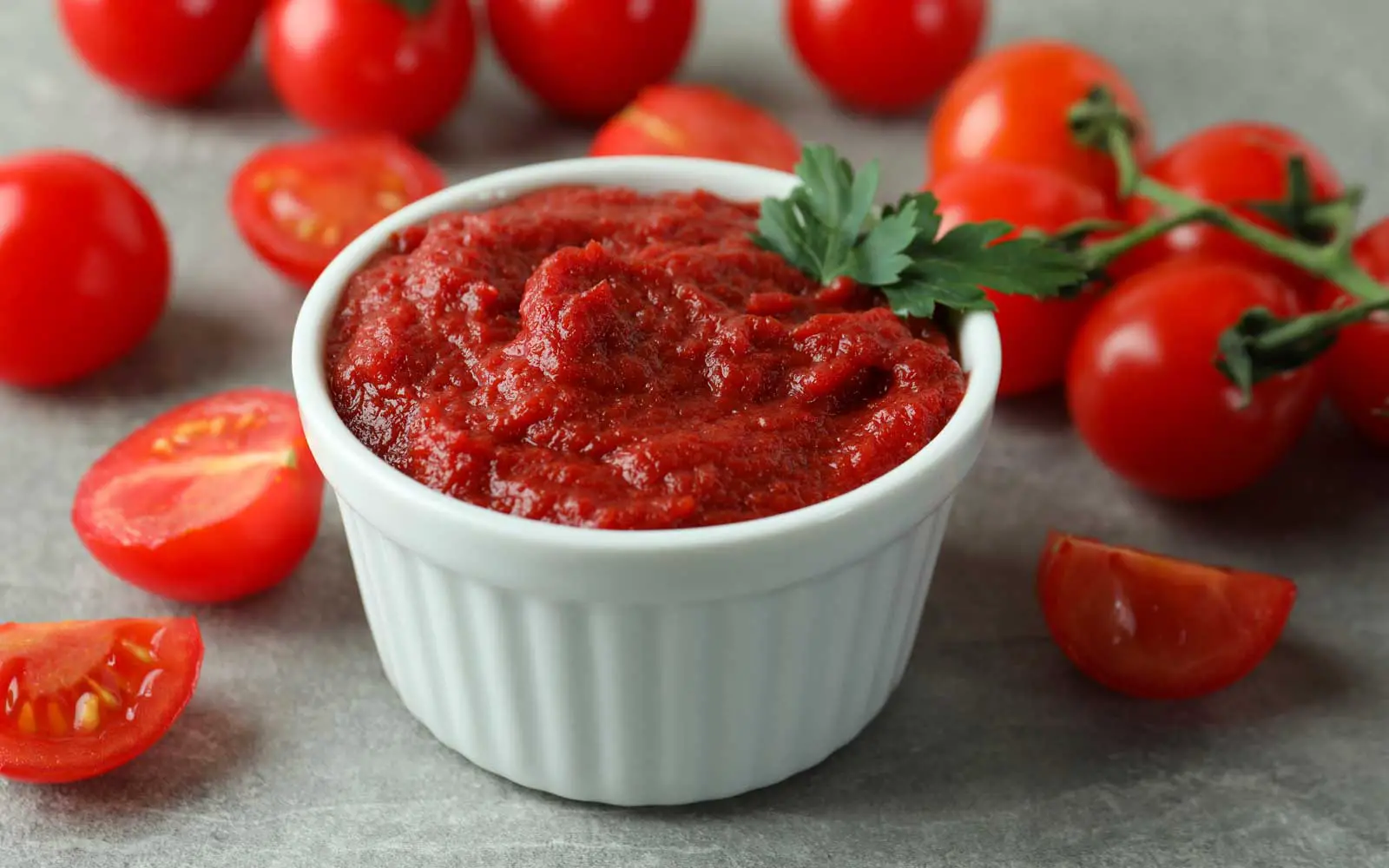
Tomato paste is a small ingredient that does a great deal of work in Persian cooking. A spoonful gives stews, soups and rice dishes a deeper colour and a concentrated summer tomato flavour, especially when fresh tomatoes are out of season.
What is it?
Tomato paste is made by cooking tomatoes down until much of their water has evaporated, then straining and concentrating the pulp. Traditional Persian and Middle Eastern varieties are often thick, strongly flavoured and slightly sour.
What does it taste like?
It tastes intensely of ripe tomato, with savoury sweetness, acidity and sometimes a faint bitterness straight from the tin. Briefly frying the paste mellows that raw edge and develops a richer, rounder flavour.
Why is it used in Persian cooking?
Tomato paste builds colour and depth in khoresh, soups, braises and some rice dishes. It is particularly useful in winter, when fresh tomatoes may lack flavour. Its acidity also helps balance rich meat, oil and gently sweet vegetables.
How to choose it
Choose a thick paste with tomatoes near the top of a short ingredient list. Persian or Middle Eastern brands often have the robust, slightly tart flavour I prefer. Tubes are convenient for small amounts; tins are economical when you cook larger batches.
How to prepare it
For the best flavour, fry tomato paste in a little oil for one or two minutes, stirring so it does not catch. Its colour should deepen and the raw smell should soften before liquid is added. If your paste tastes very sweet and mild, a little lemon juice can restore the brighter flavour.
Storage tips
Transfer leftover paste from an opened tin to a clean airtight container and refrigerate. For longer storage, freeze tablespoon portions on a lined tray, then place the frozen portions in a sealed bag. This makes it easy to add exactly what a recipe needs.
Nutritional benefits
Tomato paste provides concentrated tomato nutrients, including lycopene. Because it is concentrated, it can also contain more sodium per spoonful than fresh tomato when salt is added, so compare labels if that matters to you.
Common substitutes
For each tablespoon of tomato paste, use several tablespoons of tomato puree or passata and allow extra time for the liquid to reduce. Finely grated ripe tomato can work in a lighter dish, but it will not give the same concentration or colour.
Recipes using the ingredient
Use tomato paste to deepen the sauce in Khoresht Bademjan and Khoresht Baamieh. It also pairs naturally with the fresh flavours in Shirazi Salad served alongside the meal.
FAQ
Why should tomato paste be fried first?
Frying removes the raw taste, caramelises some natural sugars and helps the paste colour the oil and sauce evenly.
Can I use passata instead of tomato paste?
Yes, but passata is much thinner. Use more and reduce the other liquid or cook the sauce longer.
How do I stop leftover tomato paste going mouldy?
Move it to a clean covered container promptly, refrigerate it and freeze any amount you will not use soon.