
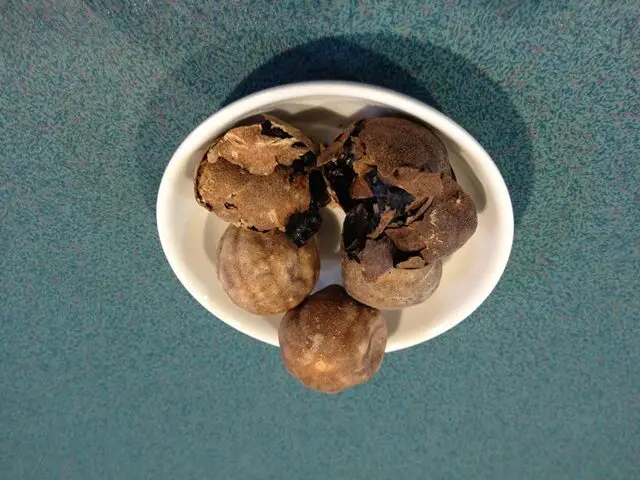
Dried lime, known as limoo amani, is one of the flavours that makes a Persian khoresh immediately recognisable. Whole or ground, it gives stews a deep sourness with a slightly fermented, earthy edge that fresh lime alone cannot copy.
What is it?
Dried limes are small limes that have been blanched or boiled and then dried until the peel is hard and the inside is dark. They may be pale tan, brown or almost black. In Persian cooking they are used whole, pierced, crushed or ground.
What does it taste like?
The flavour is tart, aromatic and pleasantly bitter, with earthy citrus notes. The interior can become strongly bitter if it breaks apart and releases too many seeds, so whole limes are usually pierced and removed before serving.
Why is it used in Persian cooking?
Persian food often balances sweet, sour and savoury flavours. Dried lime gives khoresh a rounded acidity that survives long, slow cooking. It is particularly at home with herbs, lamb, eggplant, split peas and okra.
How to choose it
Choose whole dried limes that feel light, dry and firm, without damp patches or mould. A citrus aroma should be noticeable when the packet is opened. Black limes tend to taste smokier and more intense; paler limes are often cleaner and sharper.
How to prepare it
Rinse whole dried limes, then pierce each one several times with a skewer or the tip of a small knife. Add them early enough to soften and release flavour, usually during the simmering stage. Press them gently against the side of the pot near the end, then remove before serving if you prefer less bitterness. Ground dried lime can be added by the quarter-teaspoon.
Storage tips
Keep dried limes in an airtight jar in a cool, dark and dry cupboard. Whole limes keep their aroma longer than ground lime. Buy ground limoo amani in small amounts and replace it when the citrus fragrance fades.
Nutritional benefits
Dried lime contains citrus compounds, but it is usually used in small amounts and much of a whole lime may be removed before serving. Drying and prolonged cooking can reduce heat-sensitive nutrients such as vitamin C. Treat it primarily as a flavouring rather than a major nutritional source.
Common substitutes
Fresh lime juice is the easiest substitute: add it near the end of cooking so its brightness remains. Lemon juice also works. For more depth, combine fresh lime juice with a little grated zest. Sumac adds tartness but not the same fermented citrus character.
Recipes using the ingredient
FAQ
Why should I pierce dried lime?
Piercing lets the cooking liquid enter and carry the lime flavour into the stew.
Why is my stew bitter?
A lime may have split open, or too much ground lime was added. Start modestly and remove whole limes before serving.
Can I eat the whole dried lime?
It is edible, but the peel, pith and seeds can be intensely bitter. Most cooks use it to flavour the dish and remove it.
Is black lime the same thing?
Black lime is a type of dried lime. Colour and intensity vary with the lime and drying method.