
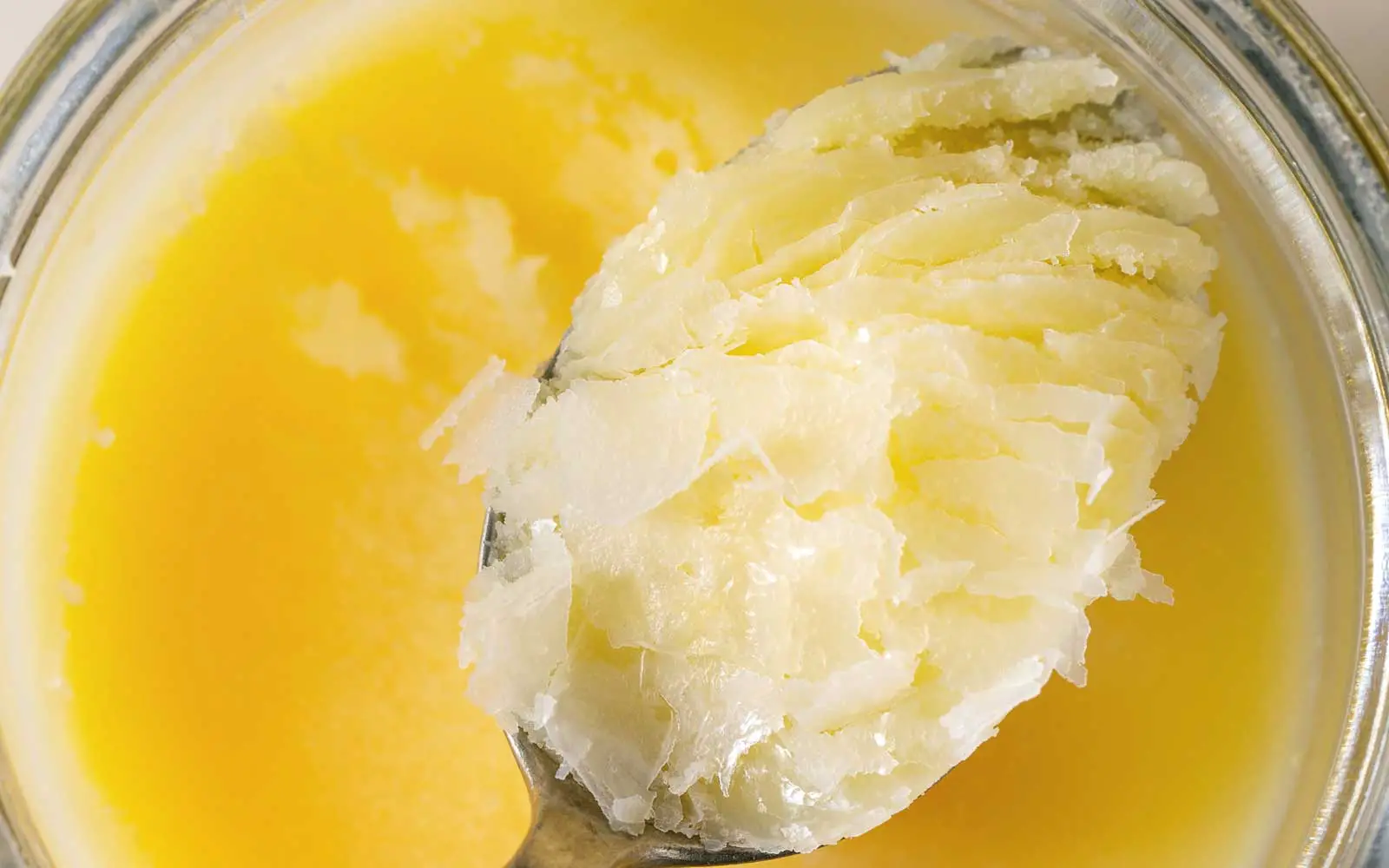
Ghee, or clarified butter, is butter that has been gently cooked so most of the water and milk solids are removed. The result is a rich golden cooking fat that tolerates more heat than ordinary butter. It is readily available in supermarkets and Persian, Afghan and Indian grocery stores.
What is it?
Ghee is made by heating butter, allowing the water to evaporate and separating the clear butterfat from the milk solids. Traditional ghee may be cooked long enough for the solids to brown slightly before straining, which gives it a deeper aroma than simply clarified butter.
What does it taste like?
Ghee tastes buttery, rich and slightly nutty. A pale ghee is usually mild; a deeper golden product may have a toasted, caramel-like aroma. It should smell clean, never sour, cheesy or rancid.
Why is it used in Persian cooking?
Ghee adds richness and helps rice, tahdig and other foods brown without the milk solids in ordinary butter burning as quickly. A small amount carries saffron and spice aromas beautifully. It is useful when you want buttery flavour with a higher-heat cooking fat.
How to choose it
Choose plain ghee with a clean ingredient list, an intact seal and a fresh date. Compare the aroma and colour between brands; both can vary. If dairy sensitivity is a concern, remember that ghee is made from milk and trace milk proteins may remain, so check the label and seek appropriate advice.
How to prepare it
Ghee is ready to use straight from the jar. Scoop it with a clean, dry spoon and melt only what you need. Use it to coat the base of a rice pot, dot over layered rice or sauté ingredients. It can become very hot, so cook attentively and do not rely on smoke alone as a temperature guide.
Storage tips
Follow the package directions. Many commercial ghees can be kept tightly closed in a cool, dark cupboard, but refrigeration is sensible in very warm conditions or when the label requires it. Keep water, crumbs and used utensils out of the jar to prevent spoilage.
Nutritional benefits
Ghee is a concentrated source of fat and energy and contains a high proportion of saturated fat. It may contain small, variable amounts of fat-soluble vitamins, but it should not be treated as a health supplement. Use it for flavour in modest amounts and consider unsaturated oils such as olive or canola oil for everyday cooking.
Common substitutes
Clarified butter is the closest substitute. Ordinary butter works at lower temperatures but its milk solids can brown or burn. Neutral oil suits high-heat cooking, while olive oil gives a different but pleasant flavour. A half butter, half neutral-oil mixture can provide buttery taste with a little more flexibility.
Recipes using the ingredient
Use ghee in Polo – Persian Rice and Salmon and Dill Layered Rice. It can also be used when preparing Baghali Polo.
FAQ
Is ghee the same as butter?
It begins as butter, but most water and milk solids have been removed, so it behaves differently in cooking.
Does ghee need refrigeration?
Follow the label. Keep it cool, dark, tightly closed and free from moisture.
Is ghee dairy-free?
No. It is made from milk, and trace milk proteins may remain even though most solids are removed.
Can I use olive oil instead?
Yes in many savoury dishes, but the flavour and texture will be different.