
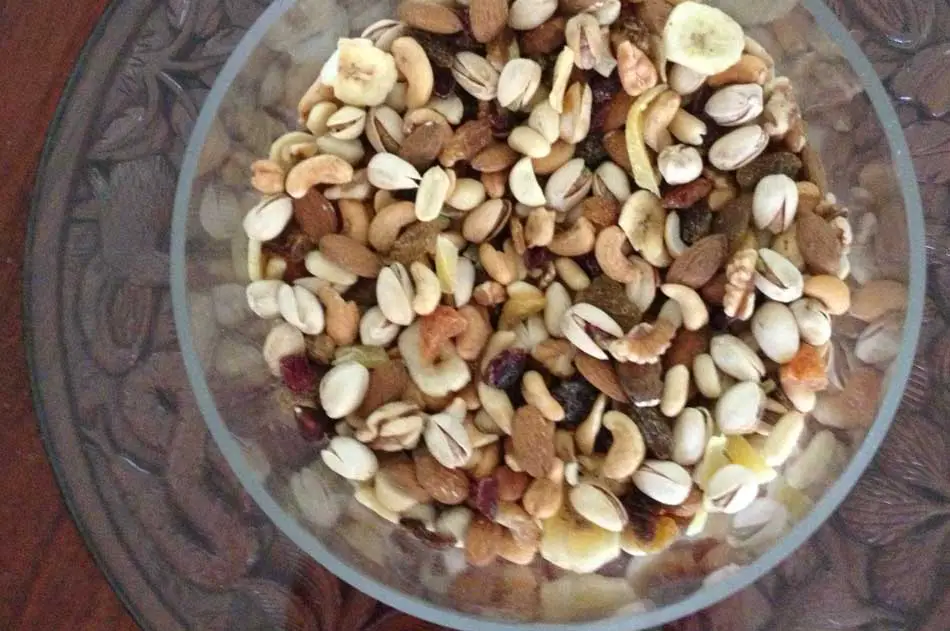
Adjil is the bowl everyone gathers around. This Persian mix of nuts, seeds and dried fruit can be sweet, salty or somewhere in between, and every family seems to make it differently. I like that there is no strict recipe: use the ingredients you enjoy and adjust the balance for the occasion.
What is it?
Adjil is a Persian snack mix made from nuts, seeds and sometimes dried fruit. A salty adjil may include pistachios, almonds, walnuts, hazelnuts, pumpkin seeds and sunflower seeds. Sweet adjil leans towards unsalted nuts with raisins, mulberries, figs, apricots or other dried fruit. It is commonly offered to guests and enjoyed during celebrations such as Nowruz and Yalda.
What does it taste like?
The flavour depends entirely on the mix. Roasted nuts and seeds are crisp, savoury and nutty; dried fruit adds chewy sweetness and a little acidity. Salted versions are moreish and robust, while sweet adjil is gentler and lets each fruit and nut keep its own character.
Why is it used in Persian cooking?
Adjil is less an ingredient in a cooked dish and more a part of Persian hospitality. A generous bowl is easy to share with tea, bring out when visitors arrive or place on the table for a celebration. The variety also means everyone can find a favourite piece.
How to choose it
Choose nuts and seeds that smell fresh and feel crisp, never stale, oily or bitter. Dried fruit should be pliable rather than damp or sticky. For a ready-made mix, check the use-by date and avoid packets with condensation. If salt matters to you, compare labels or blend salted nuts with unsalted ones.
How to prepare it
Adjil needs very little preparation. Combine equal handfuls of your chosen nuts and seeds, then add dried fruit to taste. Keep very small seeds in a separate bowl if they fall to the bottom. For stronger flavour, warm raw nuts briefly in a low oven, cool them completely and only then mix with the fruit.
Storage tips
Store adjil in an airtight container in a cool, dark cupboard. In warm weather, or for longer storage, refrigerate nuts so their natural oils stay fresh. Keep dried fruit dry and discard the whole mix if you notice mould, insects or a rancid smell.
Nutritional benefits
Nuts and seeds provide plant protein, fibre and mostly unsaturated fats, while the exact vitamins and minerals vary with the mix. Dried fruit contributes carbohydrate and natural sugars in a concentrated form. Adjil is energy-dense, and salted versions can contain considerable sodium, so a small handful is a practical serving.
Common substitutes
There is no fixed formula to replace. Use any fresh nuts, seeds or dried fruit available to you. Roasted chickpeas can add crunch, coconut flakes add sweetness, and unsalted popcorn can lighten the mix. Always consider nut and seed allergies when serving guests and label the bowl if necessary.
Recipes using the ingredient
Adjil is normally served as a snack rather than cooked, but its flavours lead naturally to Persian sweets. Try Ghorabieh – Persian Almond Cookies and Pistachio Nougat – Gaz. You can also explore the Almonds guide and Walnuts guide.
FAQ
Is adjil sweet or salty?
It can be either. Sweet adjil usually includes more dried fruit and unsalted nuts; salty adjil focuses on roasted, salted nuts and seeds.
Do I need to roast the nuts?
No. Use raw or roasted nuts according to your taste, but cool home-roasted nuts before storing.
Is adjil the same in every Persian household?
Not at all. The mix is personal and often changes with the family, season and occasion.
Can I make adjil ahead?
Yes. Store it airtight and add very soft dried fruit closer to serving if you want the nuts to remain especially crisp.