
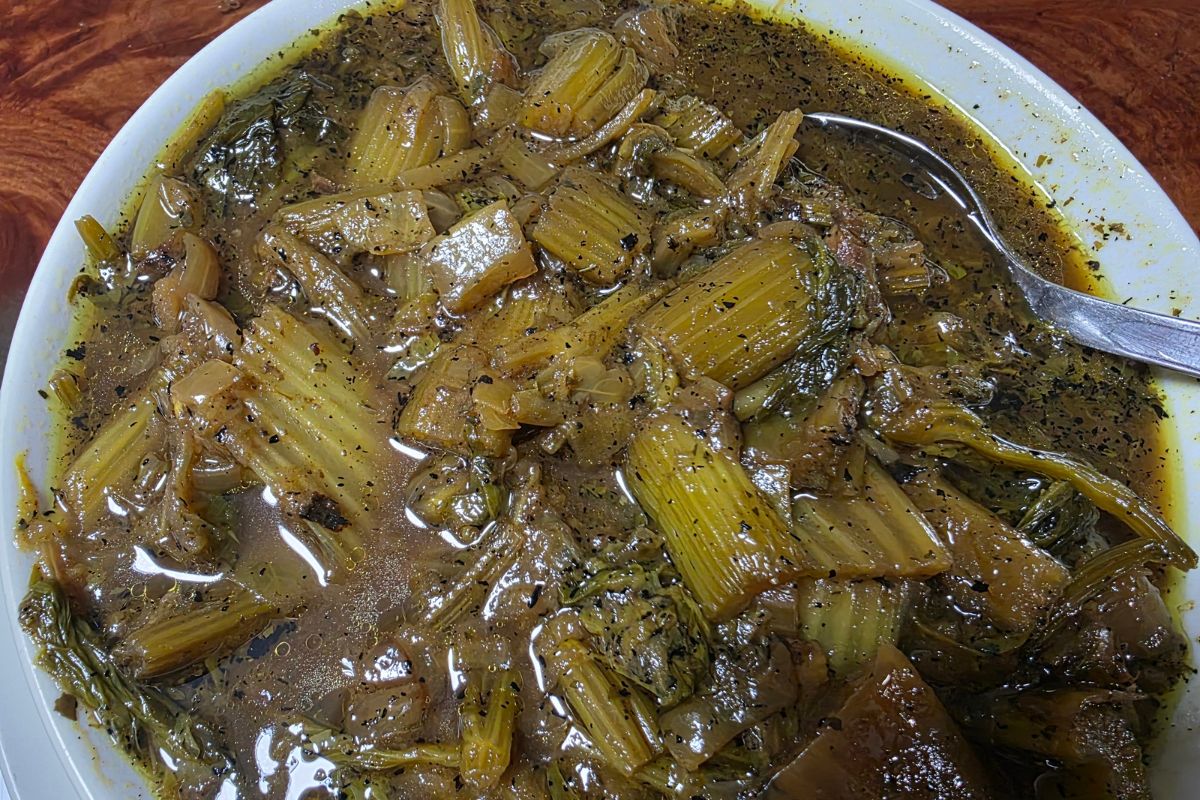
Khoresh Karafs (Persian Celery Stew) is one of the lesser-known treasures of Persian cooking. While dishes such as Ghormeh Sabzi and Fesenjan are famous around the world, Khoresh Karafs is a favourite in many Iranian homes for its fresh herb flavour, tender lamb, and delicate balance of celery, mint and parsley.
Unlike many Western stews that rely on heavy vegetables and thick gravies, Persian stews are lighter, aromatic, and designed to be served alongside fluffy Persian rice. The slow cooking allows the meat to become wonderfully tender while the herbs and celery develop a rich, savoury flavour.
This comforting meal is perfect for cooler weather, family gatherings, or whenever you are craving authentic Persian home cooking.
Quick Recipe Summary
- Authentic Persian family recipe
- Slow-cooked lamb with celery and fresh herbs
- Naturally gluten free
- Perfect for meal prep
- Traditionally served with Persian steamed rice
- Freezer friendly
Why You Will Love This Recipe
There are many reasons why Khoresh Karafs has remained a favourite in Persian kitchens for generations.
- Authentic Iranian flavours
- Tender slow-cooked lamb
- Fresh herbs provide a lighter flavour than many stews
- Excellent make-ahead meal
- Ideal for freezing
- Simple ingredients that are easy to find in Australia
- Perfect comfort food without feeling heavy
What is Khoresh Karafs
Khoresh Karafs literally means “celery stew.”
Like most Persian khoresh recipes, it combines meat, herbs and vegetables that slowly cook together until the flavours become beautifully balanced.
The distinctive flavour comes from:
- celery
- mint
- onions
- turmeric
- slow-cooked lamb
Some families also add a little fresh lime juice or dried limes to give the stew a gentle tang that balances the richness of the meat. I like to add in some pomegranate molasses (Rob-e Anar), with the tarness balancing against the rich stew.
My Connection to This Recipe
I have to be honest—I have never been a big fan of celery. In fact, I used to joke with my husband that celery was God’s punishment to mankind!
I first met my Persian in-laws after ten years of marriage when they came to stay with us in Australia for six months. My wonderful mother-in-law, Mooman Joon, loved helping in the kitchen and one day she made Khoresh Karafs. We always had an agreement that if either of us did not enjoy a dish, we would say so honestly, and I have to admit that this one just was not for me. After that, I did not eat it again for many years.
Fast forward quite a few years, and our newly married daughter-in-law, invited us over for dinner. She proudly served Khoresh Karafs. As she placed it on the table, my husband looked at me with a knowing smile, remembering how much I disliked it all those years ago.
To everyone’s surprise—especially mine—I absolutely loved it. Whether my tastes had changed over the years or Mona had simply perfected the recipe, I could not believe it was the same dish I had once avoided. The fresh celery, tender lamb, and delicate flavours were nothing like I remembered.
Not long afterwards, her mother, kindly shared her family recipe with me. It has since become a favourite in our home and completely changed the way I think about Khoresh Karafs. It is a lovely reminder that sometimes it is worth giving a recipe a second chance—you might just discover a new favourite.
Equipment Needed
You do not need any special equipment to make Khoresh Karafs.
A large heavy-based saucepan or Dutch oven works perfectly.
Helpful equipment includes:
- Measuring spoons
- Large saucepan with lid
- Sharp knife
- Chopping board
- Wooden spoon
Ingredients
- Celery
- Lamb Shanks
- Pomegranate molasses
- Dried mint
Ingredient Notes & Substitutions
Lamb
Lamb shanks provide exceptional flavour, but diced lamb shoulder also works beautifully and cooks a little faster.
Celery
Use fresh celery with crisp stalks. Include some of the leafy tops, as they add wonderful flavour to the stew but too many will make it bitter.
Herbs
Fresh mint produces the best flavour, but dried mint may be substituted if fresh is unavailable.
Oil
Olive oil or a neutral vegetable oil both work well.
Lemon
A squeeze of fresh lemon juice at the end brightens the entire dish.
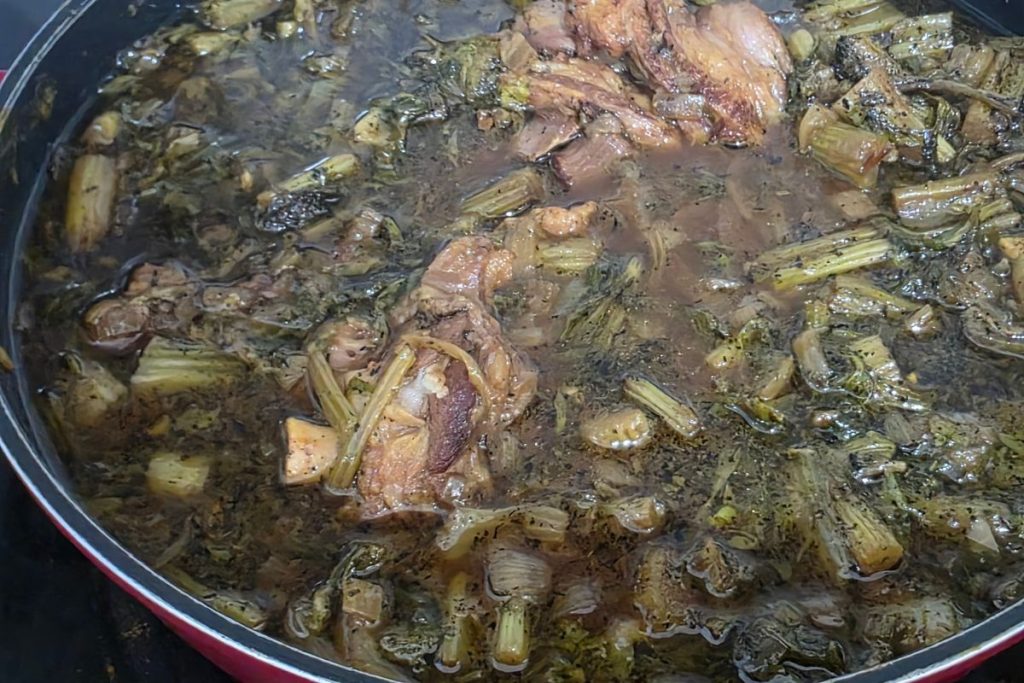
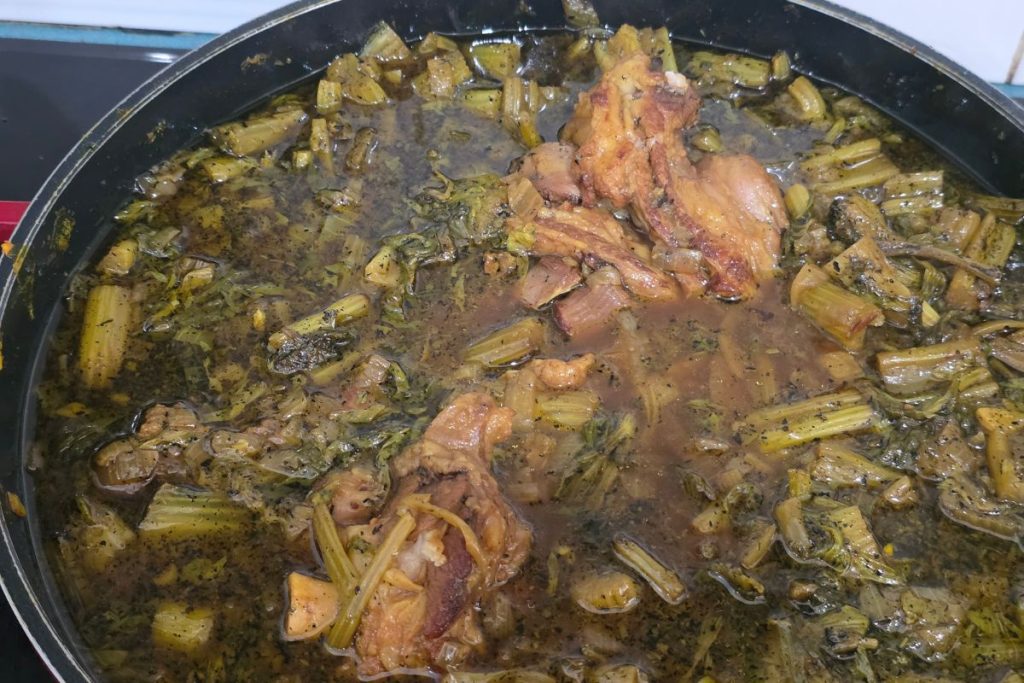
How to Make Khoresh Karafs
Tips for Success
The secret to a great Khoresh Karafs is patience.
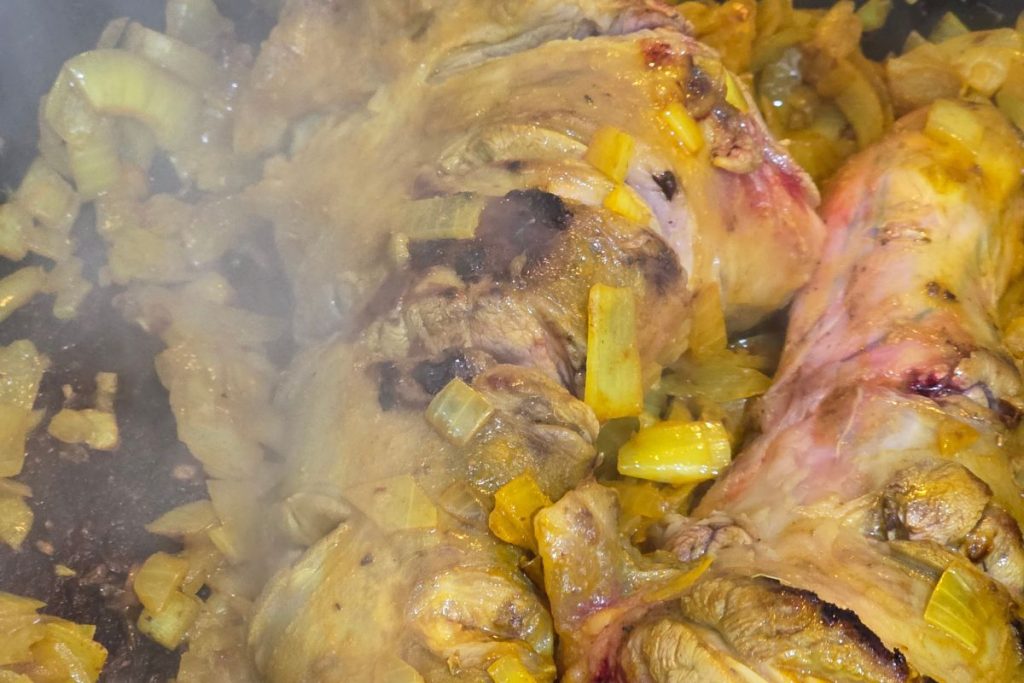
- Brown the meat well before simmering.
- Cook the herbs long enough to develop their flavour.
- Avoid overcooking the celery so it keeps a little texture.
- Simmer gently rather than boiling rapidly.
- Taste before serving and adjust the seasoning if needed.
Persian stews almost always taste even better the following day after the flavours have had time to develop.
Common Mistakes to Avoid
Avoid these common issues for the best results.
- Serving before the flavours have had time to develop.
- Using tough celery that has not been trimmed.
- Cooking the stew too quickly.
- Skipping the browning step.
- Using too little seasoning.
- Overcooking the celery until it becomes mushy.
Variations
Every Persian family has their own version.
Some popular variations include:
- adding dried Persian limes
- using beef instead of lamb
- increasing the mint for a stronger herbal flavour
- making a lighter version with less oil
- using diced lamb shoulder rather than lamb shanks
What to Serve With Khoresh Karafs
Khoresh Karafs is traditionally served with Persian steamed rice.
Popular accompaniments include:
- Sabzi Polo
- Persian steamed rice (Chelow)
- Shirazi Salad
- Mast-o-Khiar (Persian yoghurt and cucumber)
- Fresh herbs (Sabzi Khordan)
- Lavash or Sangak bread
A bowl of yoghurt alongside the stew also helps balance the rich flavours.
Storage, Meal Prep & Leftovers
Khoresh Karafs stores exceptionally well and is an excellent recipe for meal preparation.
Refrigerator
Store in an airtight container for up to 4 days.
Freezer
Freeze for up to 3 months.
Reheating
Reheat gently on the stovetop or in the microwave until piping hot.
Many people believe the stew tastes even better the next day as the flavours continue to develop overnight
Frequently Asked Questions
Can I make Khoresh Karafs ahead of time?
Yes. In fact, many people prefer it the following day.
Can I freeze it?
Absolutely. It freezes very well for up to three months.
What cut of lamb is best?
Lamb shanks or lamb shoulder both work beautifully.
Can I use dried herbs?
Fresh herbs give the best flavour, but dried mint can be substituted if necessary.
Is Khoresh Karafs spicy?
No. Persian cuisine is aromatic rather than hot, relying on herbs and spices such as turmeric instead of chilli.
What rice should I serve with it?
Traditional Persian steamed rice is the classic accompaniment.
More Persian Recipes You’ll Love
- Ghormeh Sabzi
- Fesenjan
- Sabzi Polo
- Shirazi Salad
- Mast-o-Khiar
- Persian Steamed Rice
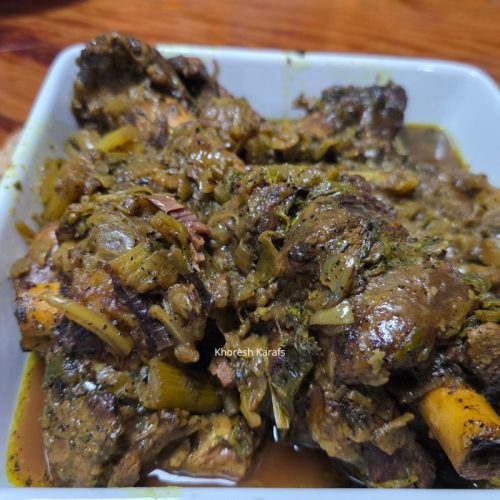
Khoresh Karafs
Ingredients
- 2 only Lamb Shanks
- 2 each Onions
- 2 bunches Celery
- 3 tablespoons Dried Mint
- 3 tablespoons Olive Oil
- 3 tablespoons Turmeric
- 3 tablespoons Salt
- 3 tablespoons Pomegranate Molasses
Instructions
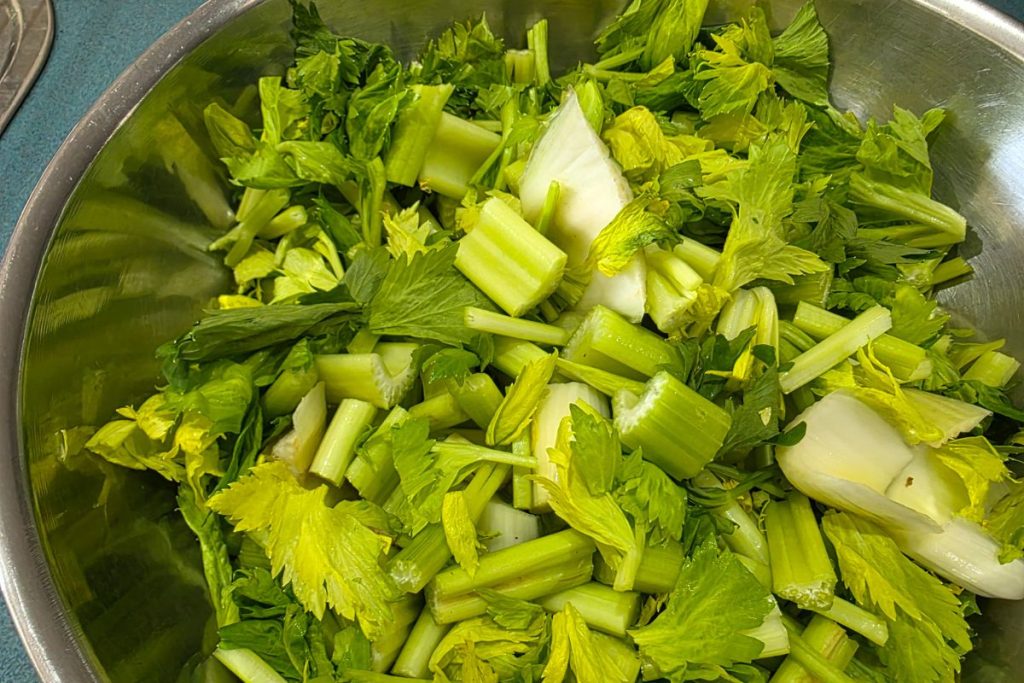
- Chop celery stalks into 1 cm pieces and wash and drain well.
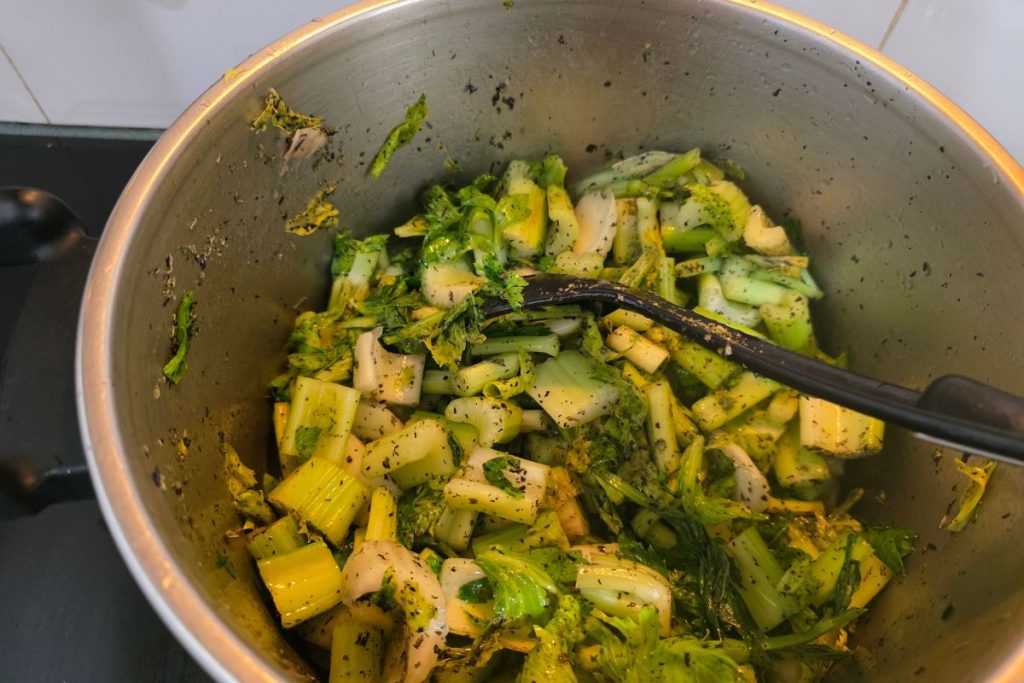
- Add 2 – 3 tablespoons of oil to a frying pan on a medium heat, add celery and mint, Sauté on a mediums heat till cooked.
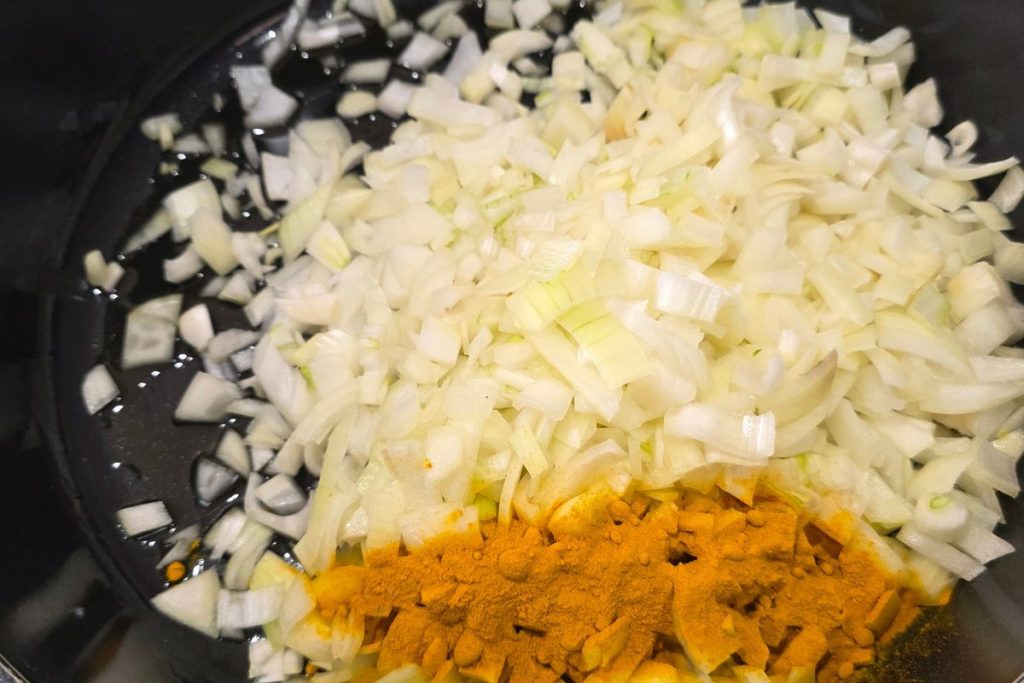
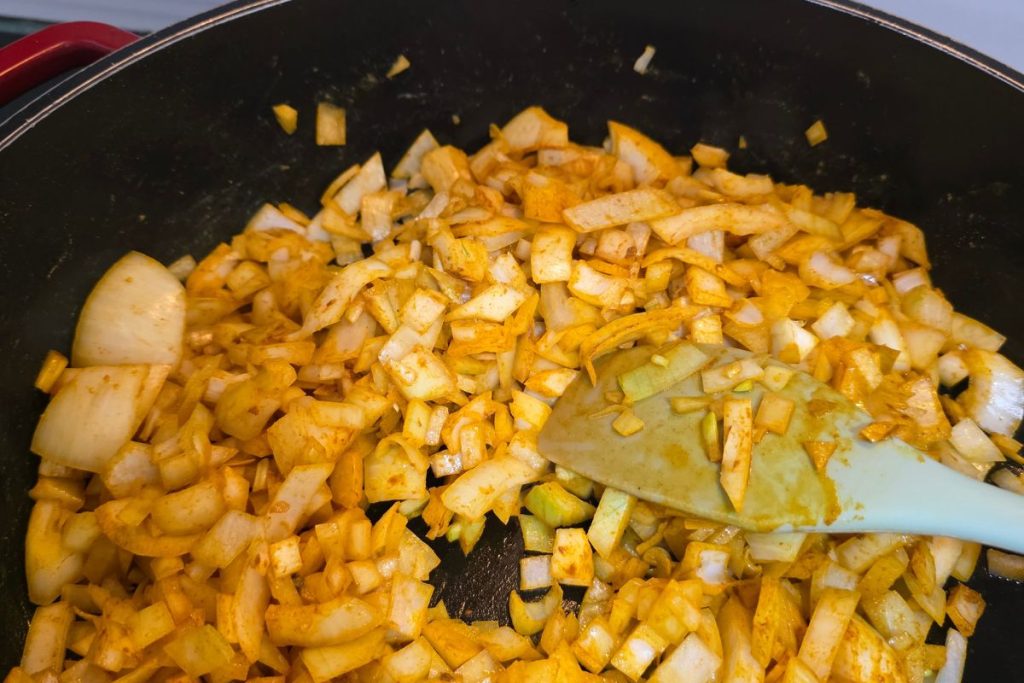
- Chop onions and saute in another large pan with turmeric until onions are translucent.
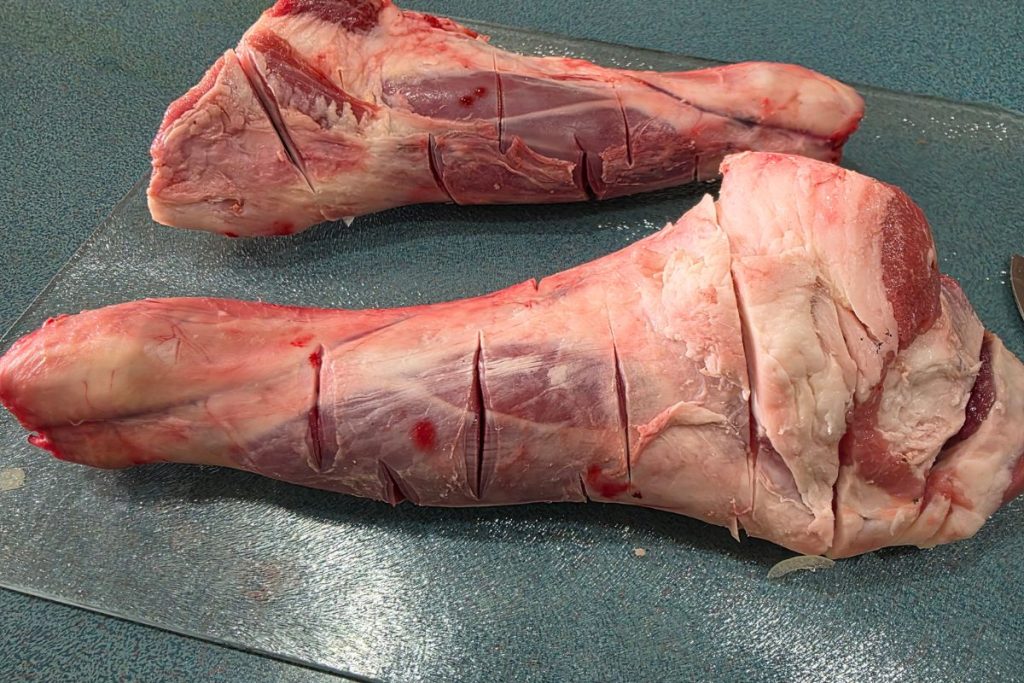
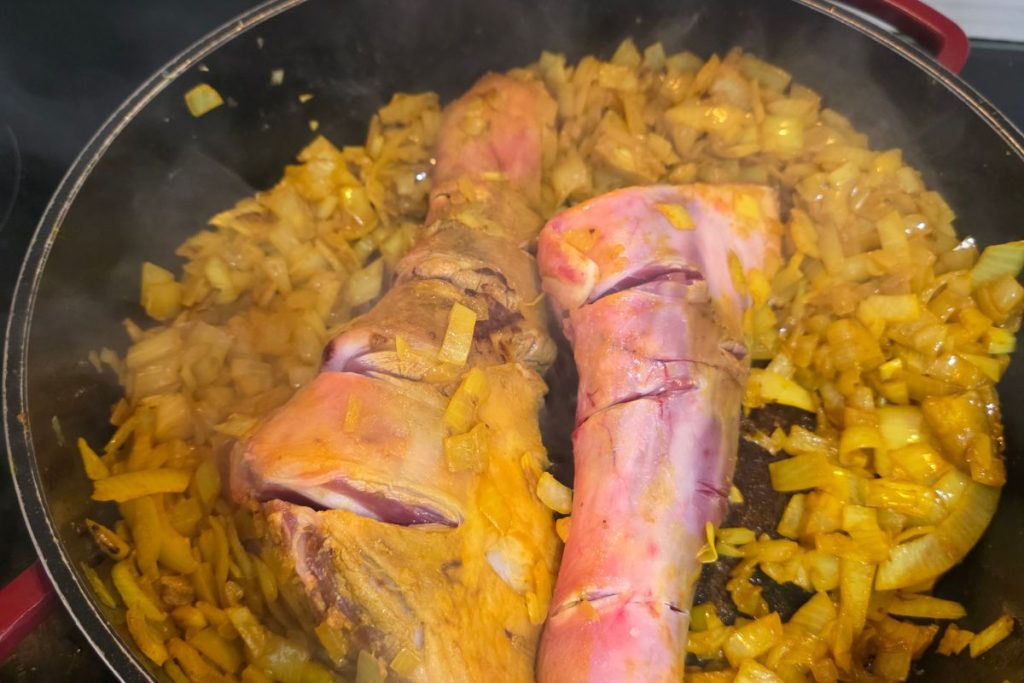
- Score the lamp shanks with a sharp knife to the bone in 2 – 3 places. Increase the heat in the frying pan with the onions and add to the lamb shanks, while frying, turn to seal all sides.
- Add celery to the lamb and onions, with enough water to cover. Sir through the pomegranate molasses. Simmer on a slow heat until the lamb is well cooked and the meat falls off the bine.
Leave a Reply
You must be logged in to post a comment.