
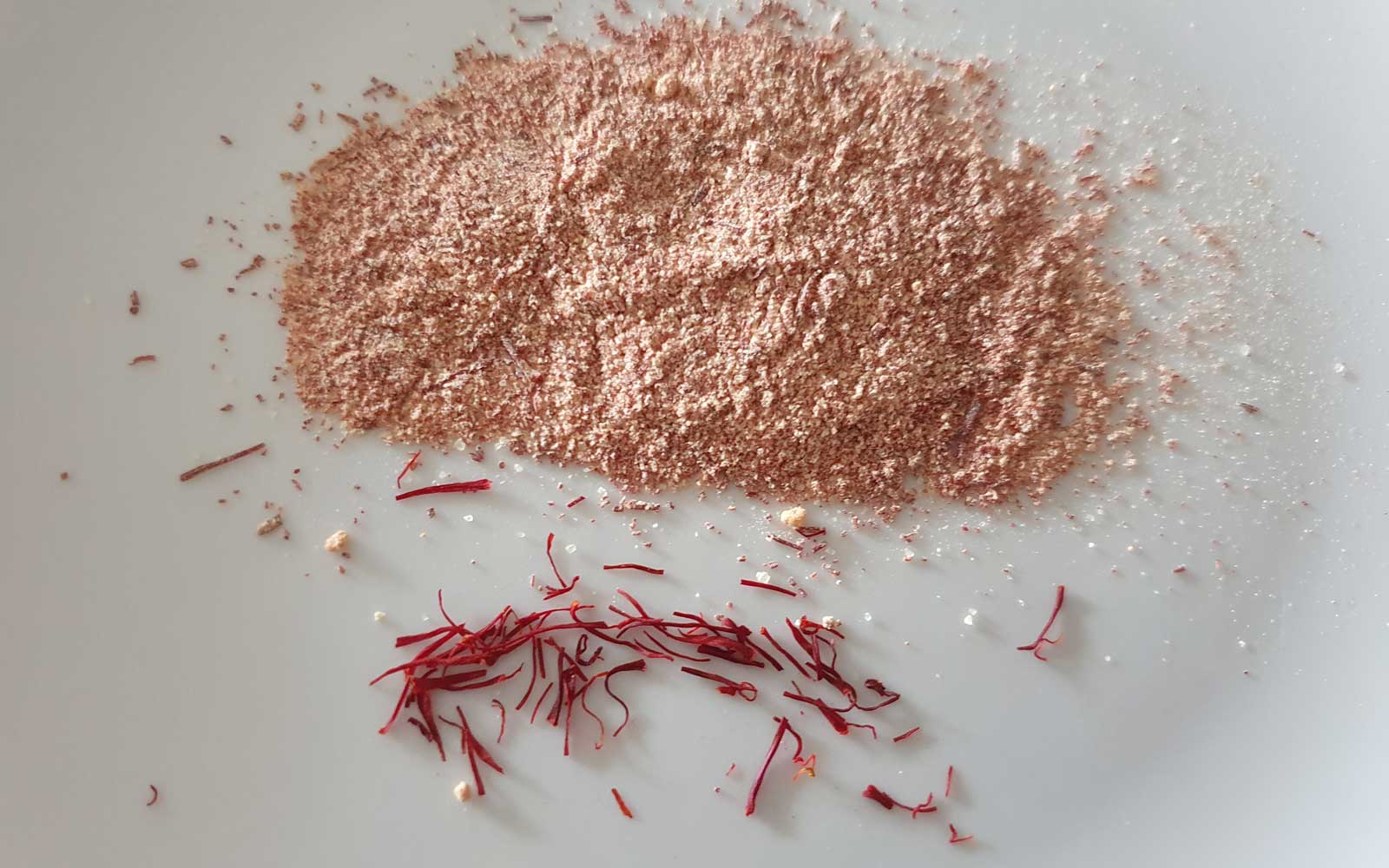
In a Persian household, saffron is treated like gold. Grinding the threads into saffron powder helps the colour and aroma spread evenly, so a small amount can flavour rice, stews and sweets without wasting precious strands.
What is it?
Saffron powder is finely ground saffron made from the dried red stigmas of Crocus sativus. It may be pure saffron or a home-prepared blend ground with a little sugar to help break the threads into a fine, even powder. Commercial products should be checked carefully because powders are easier to adulterate than whole threads.
What does it taste like?
Saffron is floral, honeyed and earthy, with a gentle bitterness. Its aroma is as important as its taste. Good saffron should smell complex and warm rather than merely sweet or strongly chemical.
Why is it used in Persian cooking?
Saffron provides the golden colour and fragrance associated with Persian hospitality. It finishes polo rice, perfumes tahdig, enriches khoresh and gives cakes, biscuits, nougat and ice cream their celebratory character.
How to choose it
Whole deep-red threads are the safest starting point because their quality is easier to judge. Look for dry threads with a strong aroma and very little yellow material. Buy from a trusted Persian grocer and avoid unusually cheap powder or products that release colour instantly like dye.
How to prepare it
Place the threads in a small spice grinder or mortar and grind to a fine powder. A pinch of sugar can help create an even texture. For most dishes, bloom the powder in a small amount of hot—not vigorously boiling—water and leave it for 10 to 15 minutes. Add the infusion to rice or the dish as directed. The existing family tip of grinding saffron with sugar can be retained, but artificial colouring is optional and is not needed for flavour.
Storage tips
Store saffron powder in a small airtight container away from light, heat, steam and strong-smelling spices. Grind only a modest quantity at a time because powder loses aroma faster than whole threads. Always use a dry spoon.
Nutritional benefits
Saffron contains naturally occurring compounds including crocin, crocetin and safranal that have been studied for antioxidant activity. Culinary portions are very small, so saffron should be valued as a spice rather than used to make medical or therapeutic claims.
Common substitutes
There is no true substitute for saffron’s aroma. Turmeric can provide yellow colour but tastes earthy and should be used sparingly. Safflower adds colour with little saffron flavour. For an important Persian dish, it is better to use a small amount of genuine saffron than a large amount of an imitation.
Recipes using the ingredient
FAQ
Should saffron powder be bloomed?
Blooming helps distribute its colour and aroma through the dish.
Can I grind saffron in advance?
Yes, but only grind a small amount and store it airtight in the dark.
Is turmeric the same as saffron?
No. Turmeric colours food yellow but has a very different earthy flavour.
How can I tell if saffron is genuine?
Buy threads from a trusted seller, look for deep-red stigmas and avoid products that seem unusually cheap or release artificial-looking colour immediately.